authentic carbonara

Authentic Carbonara Recipe: The Real Roman Way With No Cream

  • 📅 March 15, 2026
  • ⏱ 30 minutes total
  • 🍽 2 servings
  • 🌎 Italian Cuisine — Rome

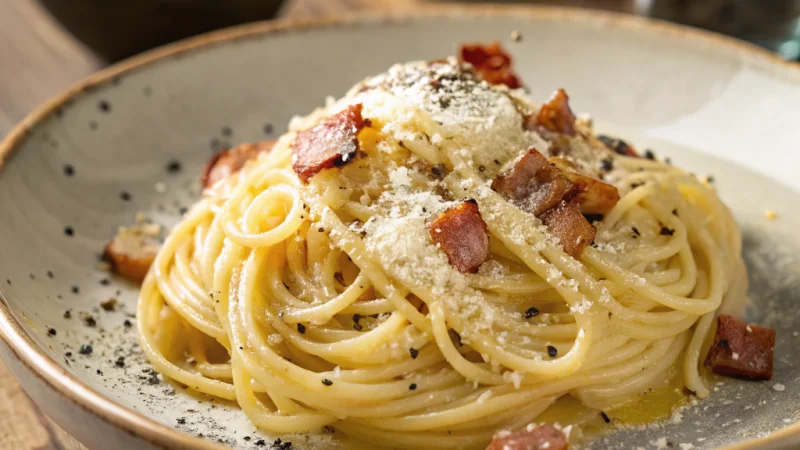
There are few dishes in Italian cooking that provoke as much passion, debate, and outright culinary outrage as authentic carbonara. Ask a Roman cook about adding cream to carbonara and watch what happens. This is not merely a preference — in Rome, it is a matter of gastronomic identity. Authentic carbonara contains no cream. No onions. No garlic. No peas. None of the additions that have accumulated around the dish as it traveled the world and collected well-meaning but entirely misguided modifications.

The real recipe is far simpler than any of those versions, and infinitely more satisfying. Just four core ingredients: guanciale (cured pork cheek), egg yolks, Pecorino Romano, and coarsely ground black pepper. The creaminess in authentic carbonara comes not from dairy but from the careful emulsification of egg yolks and cheese with starchy pasta water — a technique that produces a sauce far silkier and more complex than anything cream could achieve.

This guide gives you the real method: the one used by Roman home cooks and the trattorias of the Testaccio neighborhood, where carbonara was born. It takes 30 minutes from start to finish and demands only one thing from you — attention during the final 90 seconds of cooking.

The Origins of Authentic Carbonara

The exact origin of carbonara is one of the most passionately disputed questions in Italian food history. The most widely accepted theory traces the dish to Rome in the mid-20th century, specifically to the years following World War II. American soldiers stationed in Italy brought with them large supplies of powdered eggs and smoked bacon — both of which Roman cooks are said to have combined with pasta to create an early version of the dish. Over the following decades, the bacon was replaced with local guanciale, the powdered eggs with fresh yolks, and the dish evolved into the version that Rome considers definitive today.

The name itself may derive from carbone, the Italian word for coal. Some food historians suggest the dish was first made by charcoal workers in the Apennine mountains, who cooked it over open fires and whose black pepper-dusted plates resembled coal dust. Others believe the carbonaro (coal man) reference simply reflects the heavy use of black pepper that defines the dish. Whatever the true etymology, authentic carbonara is now one of the four iconic Roman pasta dishes, alongside cacio e pepe, amatriciana, and gricia.

The Four Ingredients of Authentic Carbonara — and Why Each One Matters

1. Guanciale — Not Bacon, Not Pancetta

Guanciale is cured pork cheek — salted, seasoned with pepper and sometimes herbs, and aged for a minimum of three weeks. It has a significantly higher fat-to-meat ratio than either pancetta or bacon, and that fat is everything in this dish. When rendered slowly in a dry pan, guanciale releases a golden, intensely porky fat that becomes the first layer of sauce — coating the pasta before the egg mixture ever touches it.

The texture is different too. Properly cooked guanciale should be golden and slightly crisp on the outside, but still tender and yielding at the center — not crunchy, never chewy. Pancetta makes an acceptable substitute if guanciale is genuinely unavailable, but the flavor will be noticeably leaner. Smoked bacon should be avoided entirely — the smokiness competes with and ultimately overwhelms the delicate balance of the egg and cheese sauce.

2. Egg Yolks — The Engine of the Sauce

The sauce of authentic carbonara is built entirely on egg yolks. A whole egg is often added alongside the yolks to provide slightly more volume and a touch more liquid, but the richness, the golden color, and the emulsifying power come from the yolks. The proteins in the yolks, when gently warmed by the residual heat of the pasta, thicken into a smooth, velvety coating. Too much heat and they scramble into curds. Too little heat and the sauce remains thin and raw-tasting. The sweet spot is the slightly off-heat zone — warm pasta, no direct flame, continuous movement.

3. Pecorino Romano — Sharp, Salty, Non-Negotiable

Pecorino Romano is a hard, aged sheep’s milk cheese produced in Lazio (the region surrounding Rome), Sardinia, and parts of Tuscany. It is considerably saltier and sharper than Parmigiano-Reggiano, with a pungent, almost tangy edge that is essential to the flavor profile of authentic carbonara. Many Roman cooks use a blend of Pecorino Romano and Parmigiano-Reggiano (roughly 70% Pecorino to 30% Parmesan) to balance the sharpness with a gentler, nuttier note. The cheese must be grated extremely finely — almost to a powder — so it dissolves smoothly into the egg mixture without forming clumps in the finished sauce.

4. Black Pepper — In Generous, Coarsely Ground Quantities

Black pepper in authentic carbonara is not a background seasoning — it is a primary flavor and a defining characteristic of the dish. The pepper should be coarsely ground and used in quantities that will surprise anyone accustomed to the restrained use of spice in most pasta dishes. Traditionally, the pepper was toasted briefly in the dry guanciale pan before being added to the dish, which blooms its aroma and softens its sharpness into something more complex and floral. This step is optional but highly recommended.

❌ Common Carbonara Myths — Debunked
  • “Add cream for a creamier result.” Cream makes carbonara heavier, masks the egg and cheese flavor, and produces a completely different dish. The creaminess of authentic carbonara comes from emulsification, not dairy fat.
  • “Add garlic for more flavor.” Garlic has no place in carbonara. It overpowers the guanciale and disrupts the clean, three-note balance of pork, egg, and cheese.
  • “Use bacon if you can’t find guanciale.” Pancetta is an acceptable substitute. Smoked bacon is not — the smoke flavor is incompatible with the sauce.
  • “Keep the pan on the heat when adding the eggs.” Direct heat scrambles the eggs. The pan must be off the heat before the egg mixture is added.
  • “The pasta water doesn’t matter.” The starchy pasta water is what makes the sauce emulsify into a glossy coating rather than sitting as a pool of egg at the bottom of the bowl. It is essential.

Authentic Carbonara — The Real Roman Recipe

Prep10 min
Cook20 min
Total30 min
Servings2
DifficultyMedium

Ingredients

  • 200 g spaghetti or rigatoni
  • 150 g guanciale, cut into thick strips or 1.5 cm cubes
  • 3 large egg yolks
  • 1 whole large egg
  • 80 g Pecorino Romano, very finely grated (plus extra for serving)
  • 20 g Parmigiano-Reggiano, very finely grated (optional)
  • Coarsely ground black pepper — very generous amount
  • Salt — for the pasta water only

Step-by-Step Instructions

  1. Make the egg and cheese mixture. In a medium bowl, combine the 3 egg yolks and 1 whole egg. Add the finely grated Pecorino Romano and Parmigiano-Reggiano. Season with a very generous amount of coarsely ground black pepper. Whisk everything together into a thick, smooth, pale yellow paste. Set aside at room temperature — cold egg mixture added to pasta creates uneven cooking.
  2. Render the guanciale. Place the guanciale pieces in a cold, dry pan — no oil, no butter. Turn the heat to medium and cook for 6 to 8 minutes, turning occasionally, until the fat has fully rendered and the guanciale is golden on the outside with a slightly tender center. It should not be crunchy. Remove the pan from the heat and set aside, leaving all the rendered fat in the pan. If you wish to toast the black pepper, add an extra pinch directly to the hot guanciale pan off the heat and swirl briefly.
  3. Cook the pasta. Bring a large pot of water to a full rolling boil. Salt it well. Cook the spaghetti until it is just shy of al dente — approximately 1 minute less than the package time. The pasta will finish cooking in the pan. Before draining, reserve at least 240 ml (1 full cup) of the starchy pasta cooking water. This water is the key to a smooth, glossy sauce.
  4. Toss pasta with guanciale. Drain the pasta and transfer it immediately into the guanciale pan. Toss well over medium-low heat for about 30 seconds so the pasta absorbs the rendered pork fat and finishes cooking. Then remove the pan completely from the heat and allow it to rest for 30 seconds. The pan must not be over direct flame when the eggs are added.
  5. Temper and add the egg mixture. Add a generous ladleful (approximately 60 ml) of the hot pasta water to the egg and cheese mixture and whisk quickly to warm it slightly — this is called tempering, and it prevents the eggs from cooking too sharply when they hit the pasta. Pour the tempered egg mixture over the pasta. Toss vigorously and continuously, using tongs or a pasta fork, adding more pasta water a small splash at a time as needed. The sauce should come together into a glossy, creamy, uniform coating that clings to every strand within 60 to 90 seconds of tossing. If it tightens too much, add more pasta water. If it seems too loose, toss a little longer off the heat.
  6. Serve immediately. Divide the carbonara into two warmed pasta bowls. Top each portion with an extra grating of Pecorino Romano and another generous crack of coarse black pepper. Eat without delay — carbonara does not wait, and no reheating can restore the silkiness of a freshly made sauce.
⚠️ The Critical 90-Second Window

The difference between a perfect authentic carbonara and a plate of eggy scrambled spaghetti comes down entirely to what happens in the 90 seconds after the egg mixture touches the pasta. The pan must be off the heat. Your tossing must be continuous and energetic. The pasta water must be added gradually, not all at once. If the sauce begins to look grainy or the eggs start to set in chunks, immediately add a splash of pasta water and toss harder — the extra liquid and movement can often rescue it. Work quickly, work confidently, and plate the moment the sauce reaches that glossy, velvety consistency.

💡 Pro Tips for Perfect Authentic Carbonara
  • Use room temperature eggs. Cold eggs added directly from the refrigerator create a sharp temperature difference that makes them more likely to scramble. Take them out at least 30 minutes before cooking.
  • Grate the cheese as finely as possible. The finer the grate, the more smoothly it dissolves into the egg mixture. A Microplane grater is ideal. Coarsely grated cheese will leave visible lumps in the finished sauce.
  • Never add oil to the guanciale pan. The guanciale renders more than enough of its own fat. Adding olive oil dilutes the flavor and changes the character of the sauce.
  • Save more pasta water than you think you need. Reserve a full cup minimum. You may only use half of it, but running out mid-emulsification is the worst possible moment to discover you need more.
  • Warm your serving bowls. Carbonara cools rapidly once plated. Warming the bowls by filling them with hot water for 1 minute, then drying them before serving, extends the window in which the sauce remains perfectly creamy.
  • Do not scale down the black pepper. It may look like an absurd amount when you grind it. Use it anyway. The pepper is not just a seasoning in this dish — it is a structural flavor.

Authentic vs Non-Authentic Carbonara — Ingredient Comparison

Understanding what belongs in authentic carbonara and what does not is the first step to making it correctly. Here is a clear breakdown:

Ingredient Authentic Carbonara Non-Authentic Version
Pork ✓ Guanciale Bacon or pancetta
Dairy ✗ None Heavy cream
Eggs ✓ Yolks + 1 whole egg Whole eggs only
Cheese ✓ Pecorino Romano Parmesan only
Aromatics ✗ None Garlic or onion
Vegetables ✗ None Peas, mushrooms
Black pepper ✓ Coarsely ground, generous Light pinch
Pasta ✓ Spaghetti or rigatoni Any shape

Traditional Roman Variations Worth Knowing

Rigatoni alla Carbonara

While spaghetti is the most famous vessel for carbonara, rigatoni — the wide, ridged tubes — is equally traditional and arguably superior for sauce adherence. The ridges grip the creamy egg sauce, and the hollow tubes fill with pockets of rendered guanciale fat. Many Roman trattorias now serve carbonara almost exclusively with rigatoni, particularly for lunch portions where the heartiness of the tubular pasta is preferred.

Tonnarelli alla Carbonara

Tonnarelli is a thick, square-cut fresh pasta very similar to spaghetti alla chitarra, and it is perhaps the oldest vessel for this dish in Roman cooking. Its extra surface area and slight chewiness make it exceptional for carbonara — it holds the egg sauce more assertively than dried spaghetti, and the fresh pasta texture adds another dimension of luxury to an already rich dish. If you can find fresh tonnarelli, or make it yourself, try it at least once.

Gricia — The Ancestor of Carbonara

No discussion of authentic carbonara is complete without mentioning gricia, sometimes called “white carbonara.” Gricia is made with guanciale, Pecorino Romano, and black pepper — exactly the same as carbonara but without the egg. It is considered the predecessor dish, originating from the Grisciano valley in the Lazio region, and predates carbonara by centuries. For anyone who wants to understand the flavor architecture of carbonara, making gricia first is an excellent exercise.

🍴 How to Serve Authentic Carbonara

Authentic carbonara is a complete dish in itself and needs nothing alongside it except perhaps a simple green salad dressed with good olive oil and lemon — something light and acidic to cut through the richness of the pork and egg. In Rome, carbonara is typically eaten as a primo piatto (first course), followed by a grilled meat or fish. At home, a generous portion served in a single warmed bowl makes a deeply satisfying main course for two. Finish each plate tableside with the Pecorino grater and the pepper mill passed directly to your guests — this is both traditional and practical, since everyone has their own threshold for sharpness and heat.

Nutritional Information (Per Serving)

Values are estimates per plate based on 2 servings using 200g total spaghetti, 150g guanciale, and 80g Pecorino Romano. Values will vary with pasta type and portion size.

NutrientPer Serving
Calories680 kcal
Protein28 g
Total Fat32 g
Saturated Fat12 g
Carbohydrates72 g
Dietary Fiber3 g
Sodium860 mg

Storage and Reheating

Carbonara is one of the rare pasta dishes that is genuinely best eaten the moment it is made. The egg-based sauce is a live emulsion — it continues to tighten and cook from residual heat as the minutes pass, and no reheating method can fully restore the glossy, silky texture of a freshly made plate.

That said, if you have leftovers, store them in an airtight container in the refrigerator for up to 1 day. To reheat, place the pasta in a cold pan, add a small splash of water, and warm over the absolute lowest heat possible, tossing constantly. Remove from the heat the moment it is warm — any further heat will scramble the eggs. Manage expectations: reheated carbonara will be pleasant but will not recapture the original texture. The best approach is simply to make only as much as you intend to eat immediately.

Frequently Asked Questions About Authentic Carbonara

Does authentic carbonara contain cream?

No — absolutely not. Authentic carbonara contains no cream whatsoever. The creamy texture comes entirely from the emulsification of egg yolks and finely grated Pecorino Romano cheese with starchy pasta cooking water. Adding cream is considered a serious culinary error in Rome and fundamentally changes the texture, flavor, and identity of the dish.

What is the difference between guanciale and pancetta in carbonara?

Guanciale is cured pork cheek and is the only traditional meat used in authentic carbonara. It has a higher fat content than pancetta, a more intense porky flavor, and renders into a silkier, richer fat. Pancetta, made from pork belly, can be used as a substitute but produces a noticeably different result. Smoked bacon should be avoided entirely — its smokiness disrupts the balance of the dish.

Why does my carbonara turn into scrambled eggs?

Scrambled eggs happen when the egg mixture is added to pasta that is still over direct heat, or when the pasta itself is too hot. The eggs cook too quickly and curdle instead of emulsifying smoothly. Always remove the pan completely from the heat before adding the egg mixture, and add the starchy pasta water gradually while tossing vigorously and continuously throughout.

Can I use Parmesan instead of Pecorino Romano?

Pecorino Romano is the traditional and correct cheese for authentic carbonara — saltier, sharper, and more pungent than Parmesan. Many Roman cooks use a blend of about 70% Pecorino to 30% Parmigiano-Reggiano for a slightly rounder flavor. Using only Parmesan produces a milder result that lacks the edge of the traditional version.

What pasta shape is best for authentic carbonara?

Spaghetti is the most traditional shape, used in the majority of Roman recipes. Rigatoni is the second most common and arguably better for sauce adherence due to its ridges and hollow tubes. Tonnarelli (thick square-cut spaghetti) is also historically traditional. Avoid very thin pasta shapes — they do not provide enough surface area for the sauce to cling properly.

How do I store leftover carbonara?

Carbonara is best eaten immediately after cooking. If you must store leftovers, keep them in an airtight container in the refrigerator for up to 1 day. Reheat very gently in a pan over the lowest heat with a splash of water, tossing continuously. Never microwave at full power. Manage expectations — reheated carbonara will be pleasant but will not match the texture of a freshly made plate.