Classic French Onion Soup Recipe: Rich, Bubbly, and Irresistible
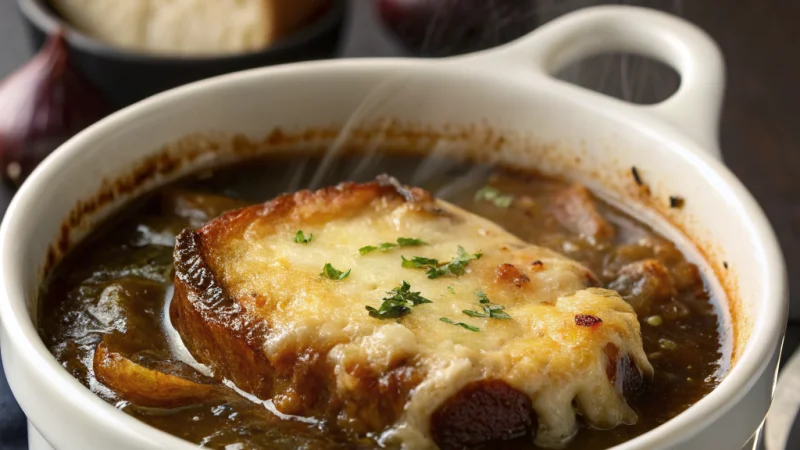
Few dishes in the entire French culinary tradition carry the kind of emotional weight that a perfectly made French onion soup does. Walk into any authentic Parisian bistro on a cold winter evening, and you will almost certainly find it on the menu — a steaming ceramic crock arriving at the table, its surface hidden entirely beneath a thick, bubbling crust of melted Gruyère cheese, the air around it fragrant with caramelized onion, warm beef broth, and a whisper of wine.
Known in French as soupe à l’oignon gratinée, this dish is one of the oldest preparations in French home cooking, with roots stretching back to 18th-century Paris. It was long considered peasant food — onions were cheap, plentiful, and easy to grow — but over the centuries, the slow cooking process transformed this humble ingredient into something so deeply flavorful that the dish found its way onto the menus of some of France’s finest restaurants.
This recipe is the real version. Not a quick weeknight shortcut, but a proper French onion soup recipe built the way Parisian cooks have always built it — with patience, good wine, real beef broth, and enough time to let the onions do what only time and gentle heat can make them do.
The Real Secret Behind a Great French Onion Soup
Ask any French chef what separates a brilliant French onion soup from a mediocre one, and they will give you the same answer without hesitation: the onions. Specifically, how long you cook them and how much patience you bring to the process.
Caramelizing onions is not a quick task. It is a transformation that happens gradually over 45 to 55 minutes of steady, medium-low heat. During this time, the natural sugars in the onions slowly break down through the Maillard reaction, shifting the color from pale white to translucent, then golden, then a rich, deep amber-brown. The sharp, pungent raw onion flavor disappears entirely, replaced by something astonishingly sweet, savory, and complex.
The second non-negotiable is the broth. A great French onion soup is built on a well-made beef broth — ideally homemade, or at the very least a high-quality store-bought version with real body to it. The richness of the broth marries with the sweetness of the caramelized onions and the acidity of the wine to create a base with extraordinary depth.
And the third element, of course, is the cheese. Not processed slices, not mozzarella — but proper Gruyère from Switzerland or its close cousin Comté, grated thickly and placed under a hot broiler until it melts into a golden, bubbling crust with lightly charred edges that seal in all the steam below.
Classic French Onion Soup — Soupe à l’Oignon Gratinée
Ingredients
- 1.2 kg (about 6 large) yellow onions, thinly sliced into half-moons
- 3 tablespoons unsalted butter
- 1 tablespoon olive oil
- 1 teaspoon granulated sugar
- 3 garlic cloves, minced
- 1 tablespoon all-purpose flour
- 150 ml dry white wine or dry sherry
- 1.5 litres good-quality beef broth (preferably homemade)
- 2 sprigs fresh thyme
- 1 bay leaf
- Salt and freshly ground black pepper to taste
- 8 thick slices of baguette or rustic country bread
- 200 g Gruyère cheese, coarsely grated
- 2 tablespoons Parmesan, finely grated (optional, for extra depth)
Step-by-Step Instructions
- Caramelize the onions (the most important step). In a large, heavy-bottomed pot or Dutch oven, melt the butter together with the olive oil over medium heat. Add all the sliced onions and the sugar. Stir to coat. Cook over medium-low heat, stirring every 5 to 7 minutes, for a full 45 to 55 minutes. The onions will go through stages — first softening and becoming translucent, then slowly turning golden, and finally reaching a deep, rich amber-brown color with a jammy texture. Do not rush this step under any circumstances.
- Add garlic and flour. Add the minced garlic to the caramelized onions and cook, stirring, for 1 minute until fragrant. Sprinkle the flour evenly over the onions and stir continuously for 2 minutes to cook out the raw flour taste.
- Deglaze with wine. Pour in the dry white wine or sherry. Use a wooden spoon to scrape up all the dark, caramelized bits stuck to the bottom of the pot — this is concentrated flavor. Let the wine reduce for 3 to 4 minutes, stirring, until almost fully absorbed.
- Build and simmer the broth. Pour in the beef broth and add the thyme sprigs and bay leaf. Bring to a gentle boil, then reduce to a steady simmer. Cook uncovered for 20 minutes to allow the flavors to deepen and marry. Season generously with salt and black pepper. Remove and discard the thyme sprigs and bay leaf.
- Toast the croutons. Arrange the baguette slices in a single layer on a baking sheet. Place under the broiler for 2 minutes per side until golden and completely crisp. A firm crouton will float properly on the soup without sinking or becoming soggy.
- Assemble and broil. Preheat the broiler to high. Place 4 oven-safe soup crocks on a sturdy baking sheet. Ladle the hot soup into each crock, filling to about 2 cm from the rim. Place 1 to 2 toasted croutons on top of the soup, covering the surface. Heap the grated Gruyère generously over the croutons — do not be shy, it should form a thick layer. Add a pinch of Parmesan if using. Slide under the broiler for 3 to 5 minutes, watching closely, until the cheese is fully melted, bubbling, and golden-brown with lightly charred edges. Serve immediately — the soup waits for no one.
The single most frequent reason a homemade French onion soup disappoints is undercooked onions. Many recipes suggest 20 to 25 minutes for caramelization — this is simply not enough time. Onions that have only softened will taste sharp and one-dimensional. True caramelization, where the sugars have fully broken down and the onions have turned deep amber and jammy, takes at least 45 minutes. If your onions are still pale gold at the 30-minute mark, lower the heat slightly and keep going. The reward for your patience will be immediately obvious in the first spoonful.
- Use yellow onions. They have the ideal sugar content for caramelization. White onions are too sharp; red onions are too sweet and will turn the soup an unappetizing muddy color.
- A pinch of sugar helps. Adding just one teaspoon of sugar to the onions at the start accelerates the caramelization process and deepens the final color without making the soup noticeably sweeter.
- Homemade beef broth is transformative. If you can simmer your own broth — even a simple one from roasted beef bones — the difference in depth is remarkable. If using store-bought, choose a full-bodied variety and taste before adding salt, as commercial broths vary widely in sodium content.
- Grate the Gruyère yourself. Pre-grated cheese contains anti-caking agents that prevent it from melting as smoothly. A box grater and a block of proper Gruyère take 2 minutes and make a visible difference in the final crust.
- Keep the broiler door slightly open. This prevents steam build-up and allows you to watch the cheese closely so it does not burn. The window between perfect golden crust and overdone is a matter of 60 seconds.
Choosing the Right Cheese for French Onion Soup
The cheese topping is the visual and textural centerpiece of a French onion soup, and the choice of cheese matters enormously for how the finished dish looks, tastes, and behaves under the broiler.
Gruyère — The Classic Choice
Gruyère is the gold standard. A firm Swiss cheese aged for a minimum of five months, it has a complex, nutty, and slightly sweet flavor profile that pairs perfectly with the savory richness of the onion broth. Most importantly, it melts into a smooth, cohesive layer that forms the trademark golden crust when broiled. Look for AOP-certified Gruyère for the most authentic result.
Comté — The French Alternative
Many traditional French recipes use Comté, a close cousin of Gruyère produced in the Franche-Comté region of eastern France. Comté is slightly earthier and more mineral in character, with a longer melting time that produces an even thicker, chewier crust. If you can find a well-aged Comté (18 months or more), it is arguably the finest cheese you can use in this dish.
A Note on Combinations
A mixture of Gruyère with a small amount of Parmesan adds saltiness and helps the crust brown more quickly and evenly under the broiler. This combination is particularly useful if your Gruyère is on the milder side. Avoid mozzarella entirely — it melts well but contributes almost no flavor and creates a stringy, rubbery result rather than the firm, golden crust this soup demands.
The Role of Wine in French Onion Soup
Wine plays a dual role in a well-made French onion soup. First, it acts as a deglazing agent — the alcohol and acidity dissolve the fond (the caramelized residue on the bottom of the pot), which contains enormous concentrated flavor. Without this step, a significant amount of depth is literally left stuck to the pan.
Second, the wine itself contributes acidity, brightness, and complexity that balances the rich sweetness of the caramelized onions and the heaviness of the beef broth. The most traditional choice is a dry white wine — a Burgundy Chardonnay, a simple Muscadet, or any unoaked dry white you would be happy to drink. Dry sherry (fino or Amontillado) is also a classic option and adds a subtly deeper, more savory note.
Whatever you choose, the rule is the same as with all wine-based cooking: use a wine you would drink, never a so-called “cooking wine,” which contains added salt and produces flat, off flavors.
Variations Worth Exploring
Classic Parisian Bistro Style
Served in a handled ceramic crock, topped with a single thick crouton and an almost recklessly generous amount of Gruyère. The cheese must hang over the edges of the crock and seal it completely — this is what creates the dramatic, slightly charred rim that defines the bistro presentation.
Alsatian Style With Beer
In the Alsace region of northeastern France, a local variation replaces the white wine with a light lager or wheat beer. The result is slightly less acidic and has a gentle malty undertone that pairs particularly well with a more heavily aged Comté or Emmental topping.
Vegetarian French Onion Soup
Replace the beef broth with a deeply flavored mushroom and vegetable broth — ideally one made with roasted portobello mushrooms, dried porcini, celery, and a splash of tamari for umami. The caramelization process and the cheese topping remain identical, and when done well, the vegetarian version stands fully on its own as a rich and satisfying dish.
French onion soup is always served immediately from the broiler, still bubbling in its crock. Provide a small side plate for each guest to rest their hot crock on, and make sure to warn them — the ceramics retain heat for a remarkably long time. A simple green salad with a sharp Dijon vinaigrette makes an ideal accompaniment, offering a fresh, acidic contrast to the soup’s richness. In France, this soup is as often eaten as a late-night meal after an evening out as it is for a formal lunch starter — it is a dish that suits any hour and any occasion.
Nutritional Information (Per Serving)
Values are estimates per bowl based on 4 servings using 200g total Gruyère and full-fat beef broth. Values will vary depending on broth sodium content and bread quantity.
| Nutrient | Per Serving |
|---|---|
| Calories | 380 kcal |
| Protein | 16 g |
| Total Fat | 18 g |
| Saturated Fat | 9 g |
| Carbohydrates | 38 g |
| Dietary Fiber | 4 g |
| Sodium | 920 mg |
Make-Ahead, Storage, and Reheating
The soup base — caramelized onions, broth, and all — is an ideal make-ahead component and improves noticeably after a night in the refrigerator as the flavors continue to meld and deepen. Store the finished soup (without the bread and cheese topping) in an airtight container for up to 4 days in the refrigerator, or freeze it for up to 3 months.
To serve from storage, reheat the soup base gently on the stovetop until piping hot, then ladle into oven-safe crocks, top with fresh toasted croutons and freshly grated Gruyère, and broil as directed in the recipe. Never broil ahead of time and attempt to reheat — the cheese crust becomes rubbery and the bread turns unpleasantly soggy. Always finish under the broiler fresh to order.
Frequently Asked Questions About French Onion Soup
What makes a French onion soup truly authentic?
An authentic French onion soup relies on three non-negotiable elements: deeply caramelized onions cooked low and slow for at least 45 minutes, a rich beef broth as the base, and a thick slice of toasted bread blanketed in melted Gruyère cheese. Shortcuts like rushing the onions or using chicken broth will noticeably diminish the depth and richness that defines the classic version.
Why do you add wine to French onion soup?
Wine serves two purposes. First, it deglazes the pot, lifting the caramelized bits stuck to the bottom where much of the depth of flavor lives. Second, it adds acidity and complexity that balances the sweetness of the caramelized onions. A dry white wine or dry sherry are the most traditional choices — always use a wine you would happily drink, never a so-called cooking wine.
Can I make French onion soup without oven-safe bowls?
Yes. If you do not have oven-safe crocks, toast your baguette slices, place them on a baking sheet, top generously with Gruyère, and broil until golden and bubbling. Then ladle the hot soup into regular bowls and immediately float the cheesy crouton on top. It is slightly less dramatic than the traditional presentation, but the flavor is identical.
What cheese is traditionally used in French onion soup?
Gruyère is the traditional and most widely used cheese. It melts beautifully, has a nutty and slightly sweet flavor, and forms the signature golden, bubbly crust when broiled. Comté is an excellent and equally traditional alternative. Some French recipes use a blend of Gruyère and Parmesan for extra sharpness and faster browning under the broiler.
How long does it take to properly caramelize onions for French onion soup?
A minimum of 40 to 50 minutes over medium-low heat, stirring regularly. Many recipes underestimate this. The onions must progress from raw and sharp, to translucent, to golden, to a deep amber-brown. Any shortcut — turning up the heat or stopping too early — produces onions that are merely softened rather than truly caramelized, and this is the most common reason French onion soup falls flat.
Can French onion soup be made ahead of time?
Yes, the soup base is ideal for making ahead and actually improves in flavor after a night in the refrigerator. Prepare the caramelized onion broth up to 4 days in advance and store it covered. When ready to serve, reheat thoroughly on the stovetop, then ladle into oven-safe bowls, top with fresh croutons and Gruyère, and broil immediately before serving.