Moroccan tagine recipe

Moroccan Tagine Recipe: The Authentic Recipe With Olives and Preserved Lemons


  • 📅 March 14, 2026
  • ⏱ 80 minutes total
  • 🍳 4 servings
  • 🌎 Moroccan Cuisine

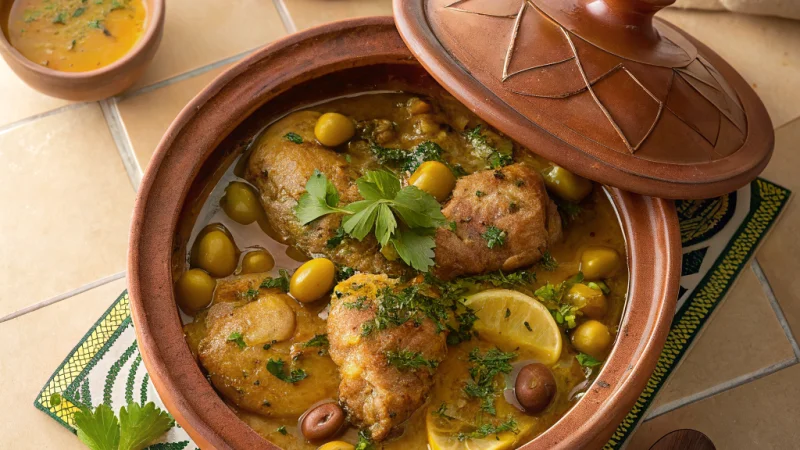
If there is one dish that captures the entire soul of Moroccan cooking in a single pot, it is the Moroccan chicken tagine. Slow-cooked over a gentle flame with a fragrant blend of warming spices, briny green olives, and the unmistakable tangy depth of preserved lemons, this iconic Moroccan tagine recipe has been passed down through generations of home cooks across the Atlas Mountains, the historic medinas of Fes and Marrakech, and family kitchens throughout the Maghreb.

This is not a dish you rush. The beauty of a tagine lies entirely in patience — in letting the heat work slowly, allowing each spice to bloom, and each ingredient to surrender its individual character into something far greater than the sum of its parts. The result is chicken so tender it practically releases from the bone on its own, bathed in a thick, golden, saffron-tinted sauce that you will want to mop up with every last piece of warm Moroccan khobz bread.

Whether you own a traditional clay tagine pot or nothing more than a reliable Dutch oven, this guide walks you through every step of the process — from the overnight spice marinade to the final flourish of fresh herbs — using the same techniques that Moroccan home cooks have relied on for centuries.

What Exactly Is a Moroccan Tagine?

The word tagine (also spelled tajine) refers to two things simultaneously: the dish itself and the vessel in which it is cooked. The vessel is a wide, shallow clay pot topped with a distinctive tall, conical lid. This design is anything but merely decorative — the cone functions as a built-in steam recycler. As liquid in the pot heats and evaporates, the steam rises and condenses against the cooler inner walls of the cone, then flows back down into the food below, continuously basting the ingredients without any need for large amounts of added liquid or stock.

In Morocco, tagines are prepared in countless variations — lamb braised with prunes and toasted almonds, spiced kefta meatballs simmered with eggs and tomatoes, whole fish cooked in chermoula — but the chicken tagine with preserved lemons and olives, known in Moroccan Darija as djaj bil hamed w zitoun, remains the most widely prepared and most universally beloved version. It is the tagine most likely to appear on a Moroccan family table for Sunday lunch, a celebration dinner, or a casual gathering with friends.

Why This Moroccan Tagine Recipe Works

Many tagine recipes cut corners — using lemon juice instead of preserved lemons, skipping the saffron, or turning up the heat to save time. This recipe does none of that. Every ingredient earns its place, and every technique exists for a specific reason:

  • Preserved lemons contribute a fermented, silky, deeply savory citrus flavor that fresh lemon juice simply cannot replicate. The weeks-long curing process breaks down the rind into something simultaneously tangy, salty, and mellow in a way that defines authentic Moroccan tagine.
  • Saffron delivers the signature golden hue and a delicate floral, honeyed complexity that sets this dish apart from any generic braised chicken recipe.
  • Green olives bring a mild brininess that cuts through the richness of the spiced sauce without overpowering the other flavors.
  • Grating the onion rather than chopping it allows it to dissolve completely into the sauce during cooking, creating a naturally thick, velvety base with no floury thickeners needed.
  • Marinating overnight gives the spice blend — ginger, cumin, turmeric, cinnamon, and black pepper — time to penetrate deep into the chicken, ensuring every bite is flavorful from the inside out.
  • Low and slow heat is the single most important rule. High heat toughens chicken and evaporates the sauce before it develops the body and richness that makes this dish so extraordinary.

Moroccan Chicken Tagine With Olives and Preserved Lemons

Prep20 min
Marinate1–12 hr
Cook60 min
Total80 min
Servings4
DifficultyMedium


Ingredients

  • 1 whole chicken (about 1.5 kg), cut into pieces — or 8 bone-in, skin-on thighs
  • 2 preserved lemons, pulp discarded, rind thinly sliced
  • 1 cup (150 g) green olives, pitted and well rinsed
  • 2 large onions, grated on a coarse grater
  • 4 garlic cloves, minced
  • 3 tablespoons extra virgin olive oil
  • 1 teaspoon ground ginger
  • 1 teaspoon ground cumin
  • 1 teaspoon ground turmeric
  • ½ teaspoon ground cinnamon
  • ½ teaspoon freshly ground black pepper
  • 1 generous pinch of saffron threads, dissolved in 2 tablespoons warm water
  • 1 large bunch fresh cilantro, finely chopped
  • 1 large bunch fresh flat-leaf parsley, finely chopped
  • ½ cup (120 ml) water or light chicken broth
  • Salt to taste

Step-by-Step Instructions

  1. Build the marinade. In a large mixing bowl, combine the grated onion, minced garlic, olive oil, all dried spices, the dissolved saffron water, and half of the chopped cilantro and parsley. Stir into a fragrant, paste-like marinade.
  2. Coat and marinate the chicken. Add the chicken pieces and turn each piece to coat thoroughly on all sides. Season generously with salt. Cover with plastic wrap and refrigerate for a minimum of 1 hour — overnight gives the most deeply flavored result.
  3. Set up your pot. Place your tagine or Dutch oven over a low-to-medium flame. If using a clay tagine on a gas burner, place a heat diffuser underneath to prevent cracking.
  4. Brown the chicken. Add a drizzle of olive oil and sear the chicken skin-side down for 3 to 4 minutes until lightly golden. Work in batches if necessary to avoid steaming.
  5. Begin the slow cook. Return all chicken to the pot and pour in the water or broth. Spoon any remaining marinade over the top. Cover tightly and reduce to the lowest heat. Cook for 45 to 50 minutes, turning the pieces once at the halfway point.
  6. Add preserved lemons and olives. In the final 15 minutes, nestle the preserved lemon rinds and rinsed green olives into the sauce. Replace the lid and let the flavors meld.
  7. Reduce and finish. Uncover and check the sauce. If too thin, raise heat to medium and cook uncovered for 5 minutes until it thickens to coat the back of a spoon. Taste and adjust salt at this point only.
  8. Garnish and serve. Scatter the remaining fresh cilantro and parsley generously over the top. Bring the pot to the table and serve immediately with warm Moroccan bread or steamed couscous.

💡 Pro Tips for a Perfect Moroccan Tagine

  • Always rinse your olives. Commercial green olives are packed in a salty brine. Rinsing them under cold water before adding to the pot keeps the dish balanced.
  • Use the rind, discard the pulp. Scoop out the preserved lemon pulp entirely — it is the cured rind that holds the silky, complex flavor this dish relies on.
  • Bloom the saffron properly. Dissolve saffron threads in 2 tablespoons of warm (not boiling) water and steep for at least 10 minutes before adding. This releases the full color and aroma.
  • Never boil a tagine. The dish should maintain a barely-there simmer throughout. A rapid boil toughens the meat and reduces the sauce before the flavors have time to develop.
  • Season at the very end. Preserved lemons and olives release significant saltiness as they cook. Always hold your final salt adjustment until after they have been added.

Popular Variations of Moroccan Chicken Tagine

The recipe above represents the classic, most widely prepared version of this dish across Morocco. But Moroccan tagine cooking is a living tradition built on regional variation, seasonal availability, and personal family touches. Once confident with the foundational technique, consider exploring these celebrated alternatives:

Chicken Tagine With Apricots and Almonds

A sweeter, more festive version popular in the culinary tradition of Fes, this variation replaces the olives and preserved lemons with plump dried apricots, honey, toasted almonds, and a heavier hand of cinnamon and ras el hanout. It is typically prepared for celebrations, weddings, and religious gatherings.

Chicken Tagine With Caramelized Onions and Raisins (Tfaya)

Known as tagine bil tfaya, this version crowns the finished chicken with a slow-cooked, jammy topping of deeply caramelized onions, golden raisins, cinnamon, and orange blossom water. The contrast between the savory spiced chicken and the intensely sweet onion compote is one of the most remarkable flavor combinations in Moroccan cooking.

Vegetarian Tagine With Root Vegetables and Chickpeas

For a fully plant-based version, replace the chicken with a combination of carrots, turnips, sweet potatoes, zucchini, and canned chickpeas. Use vegetable broth in place of water and increase the spices slightly, as vegetables absorb seasoning differently than meat.

🍴 How to Serve Moroccan Chicken Tagine

In Morocco, tagine is brought to the table in its cooking pot and placed at the center for everyone to share communally — using torn pieces of warm, round khobz bread to scoop directly from the pot. For a more composed presentation, serve alongside fluffy steamed couscous, which absorbs the rich sauce beautifully. Excellent accompaniments include a grated carrot salad with cumin and lemon, a plate of zaalouk (roasted eggplant salad), or a simple cucumber and fresh mint salad for refreshing contrast.

Nutritional Information (Per Serving)

Values are estimates per serving based on 4 portions using bone-in, skin-on chicken thighs. Values will vary depending on cuts used and olive oil quantity.

Nutrient Per Serving
Calories 420 kcal
Protein 38 g
Total Fat 22 g
Saturated Fat 5 g
Carbohydrates 14 g
Dietary Fiber 3 g
Sodium 780 mg

Storage and Reheating

Moroccan chicken tagine stores exceptionally well, and many cooks will tell you it tastes even better the following day as the spices continue to deepen overnight. Once cooled to room temperature, transfer to an airtight container and refrigerate for up to 3 days.

To freeze, remove the chicken from the bone and store the meat and sauce together in a freezer-safe container for up to 2 months. Thaw overnight in the refrigerator and reheat gently in a covered saucepan over low heat, adding 2 to 3 tablespoons of water to restore the sauce as needed.

Frequently Asked Questions

What is the difference between a tagine and a stew?

A tagine is a North African dish named after the conical clay pot it is cooked in. Unlike a regular stew, a tagine uses very little added liquid because the cone-shaped lid traps rising steam and recirculates it back into the pot, keeping the meat moist while concentrating the flavors. The result is richer, more aromatic, and more tender than a conventional stew.

Can I make this Moroccan chicken tagine without a tagine pot?

Absolutely. A heavy-bottomed Dutch oven or a deep cast-iron casserole with a tight-fitting lid is an excellent substitute. Cook on the lowest heat possible and keep the lid on throughout cooking to replicate the steam-trapping effect of the traditional conical vessel. The flavors will be very close to the authentic version.

How long can I store leftover chicken tagine?

Leftover Moroccan chicken tagine keeps well in an airtight container in the refrigerator for up to 3 days. For longer storage, freeze it for up to 2 months. Reheat gently on the stovetop over low heat with a splash of water to loosen the sauce. Many people find the flavor actually improves after a day in the refrigerator as the spices continue to develop.

What are preserved lemons and can I substitute them?

Preserved lemons are whole lemons cured in salt and their own juice for several weeks. The fermentation transforms the rind into something soft, silky, and deeply savory — a flavor profile that fresh lemon cannot replicate. There is no perfect substitute, but fresh lemon zest with a small splash of lemon juice can serve as a last resort, though the complexity of the dish will be noticeably reduced.

What type of olives work best in a Moroccan tagine recipe?

The traditional choice is green olives — specifically Picholine or Moroccan cracked green olives. These are mild, slightly briny, and hold their texture well through slow cooking. Strongly flavored black olives or Kalamata olives are not recommended as they can overpower the delicate spice balance of the sauce.

Is Moroccan chicken tagine gluten-free?

Yes, this recipe is naturally gluten-free. All the ingredients — chicken, spices, preserved lemons, olives, fresh herbs, and olive oil — contain no gluten. If cooking for someone with celiac disease, simply verify that any store-bought preserved lemons or chicken broth are labeled gluten-free, as some commercial products may contain trace additives.