paella recipe

Paella Recipe: The Authentic Spanish Valenciana With Saffron and Socarrat

  • 📅 March 15, 2026
  • ⏱ 1 hour 10 minutes total
  • 🍽 4 to 6 servings
  • 🌎 Spanish Cuisine — Valencia

Ask any Spaniard what the most misunderstood dish in the world is, and the answer will almost certainly be paella. The version most people outside Spain have encountered — a heaped, slightly sticky mix of seafood and yellow rice, often served in a deep pot — bears little resemblance to the dish that Valencians consider one of their most sacred cultural expressions. The authentic paella recipe is something altogether different: a wide, shallow pan of dry, saffron-gold rice, each grain separate and saturated with concentrated stock, topped with rabbit, chicken, and vegetables, with a thin crackling layer of caramelized rice on the very bottom that is considered the greatest prize of the entire dish.

That layer is called the socarrat, and learning to make it correctly is what separates a good paella recipe from a truly memorable one. It requires no special equipment beyond a wide pan and an attentive cook willing to listen to the sound the rice makes in the final two minutes of cooking.

This guide gives you the full Valenciana method — the version from the coastal wetlands of Valencia where paella was born, made with the ingredients Valencian families have been using for over three centuries. No shortcuts, no substitutions, no apologies for the rabbit.

The True Origins of Paella

Paella is one of the few dishes in European cooking with a precisely traceable birthplace. It was born in the Albufera — the shallow freshwater lagoon south of the city of Valencia, where the flat, fertile land surrounding the water has been used for rice cultivation since the Moorish period of the 8th to 15th centuries. The farmworkers and rice field laborers of this region cooked their midday meal outdoors over wood fires in wide, flat iron pans, using whatever ingredients were locally available: rabbit and snails from the fields, green beans and butter beans from the garden, and rice from the paddies immediately surrounding them.

The wide, shallow pan — which gave the dish its name (paella derives from the Latin patella, meaning pan) — was not chosen for aesthetic reasons but for purely practical ones. A wide, shallow pan allows the rice to spread out in a thin layer, maximizing the surface area in contact with both the heat below and the air above. This produces rapid, even evaporation of the stock, which is what gives authentic paella its characteristic dry texture and concentrated flavor.

The first written recipes for paella appear in Valencian sources from the mid-19th century. They are strikingly similar to the version cooked today — rabbit, chicken, green beans, butter beans, tomato, paprika, saffron, and rice. The dish traveled from Valencia to the rest of Spain and eventually the world, accumulating regional variations, seafood additions, and unfortunate international modifications along the way. But the original remains unchanged, and it remains the standard against which every paella recipe is measured.

The Four Unbreakable Rules of an Authentic Paella Recipe

Before a single ingredient touches the pan, it is worth understanding the four principles that govern every authentic paella recipe. These are not suggestions — they are the reasons the dish works.

Rule 1 — Never Stir the Rice

Once the stock is poured over the rice and the rice has been spread into an even layer, the pan must not be stirred for the remainder of the cooking time. Stirring releases the surface starch from the rice grains and creates a sticky, risotto-like consistency that is the opposite of what paella should be. Authentic paella rice should be dry, distinct, and fully saturated with stock — never creamy or clumped. More importantly, stirring destroys the socarrat, which requires the bottom layer of rice to remain in undisturbed, continuous contact with the hot pan.

Rule 2 — Never Cover the Pan

Paella is cooked uncovered throughout. Covering the pan traps steam, which re-condenses on the rice and makes it wet and overcooked. The entire character of the dish — its dryness, the intensity of its flavor, the formation of the socarrat — depends on open evaporation. If you see a recipe that tells you to cover the paella with foil at any point during cooking, it is not authentic.

Rule 3 — The Sofrito Is the Soul

The sofrito — the slow-cooked base of tomato, onion, garlic, and paprika — is where the foundational flavor of the entire dish is built. It must be cooked low and slow until the tomatoes have completely broken down, the onion has dissolved into sweetness, and the whole mixture is dark, concentrated, and jammy. A rushed sofrito produces a thin, acidic result that cannot be corrected by anything added afterward.

Rule 4 — Hot Stock Only

The stock added to the paella must be hot when it hits the rice. Cold stock lowers the pan temperature suddenly, shocks the rice, and disrupts the steady cooking process that is essential for even absorption. Keep your stock at a bare simmer in a separate pot throughout the cooking process and ladle it in hot. This single habit makes a measurable difference to the final texture and consistency of the dish.

🏆 What Is Socarrat — and Why Is It the Prize of the Pan?

Socarrat (from the Valencian verb socarrar, meaning to scorch lightly) is the thin, crispy, deeply caramelized layer of rice that forms on the very bottom of the paella pan when the last of the stock has been absorbed and the rice is left in contact with the hot, oiled surface for a final two minutes over raised heat. The Maillard reaction transforms the bottom grains into something toasted, nutty, and intensely savory — completely unlike the grains above. In Valencia, being offered the socarrat portion is considered a mark of hospitality and honor. Guests scrape it from the pan with a spoon and eat it with genuine reverence. A paella without socarrat is a paella that was not finished correctly.

Choosing the Right Rice for Your Paella Recipe

The rice is the single most important ingredient in any paella recipe, and the variety you choose determines the texture, the absorption, and the final result of the dish more than any other factor.

Rice VarietyOriginAbsorptionResultVerdict
Bomba Valencia, Spain Up to 3× its volume Separate, firm grains with intense flavor ✓ Best choice
Calasparra Murcia, Spain Up to 3× its volume Similar to Bomba, slightly nuttier ✓ Excellent
Senia / Bahía Valencia, Spain Moderate Creamier, less forgiving of overcooking △ Acceptable
Arborio / Carnaroli Italy High starch release Sticky, risotto-like — wrong texture ✗ Avoid
Long-grain / Basmati Various Low absorption Dry, won’t absorb stock flavors properly ✗ Avoid

Authentic Paella Valenciana — The Original Spanish Recipe

Prep20 min
Cook50 min
Total1 hr 10 min
Serves4 to 6
DifficultyMedium
Pan Size38 to 40 cm

Ingredients

  • 350 g Bomba rice (or Calasparra rice)
  • 1 whole rabbit (about 1 kg), cut into 8 pieces by your butcher
  • 400 g chicken thighs, bone-in and skin-on, cut into pieces
  • 200 g flat green beans (bajoqueta), trimmed and cut in half
  • 150 g butter beans (garrofó), canned or pre-cooked and drained
  • 2 very ripe tomatoes, grated on a box grater (skin discarded)
  • 1 large onion, very finely diced
  • 4 garlic cloves, minced
  • 6 tablespoons extra virgin olive oil
  • 1 tablespoon sweet smoked paprika (pimentón dulce)
  • 1 generous pinch saffron threads, steeped in 100 ml warm water for 10 minutes
  • 1.2 litres good-quality chicken or rabbit stock, kept hot
  • 2 sprigs fresh rosemary
  • Salt to taste
  • 1 lemon, cut into wedges for serving

Step-by-Step Instructions

  1. Brown the meat. Set the paella pan over medium-high heat and add the olive oil. Season the rabbit and chicken pieces generously with salt. When the oil is hot and shimmering, add the meat in a single layer — work in batches if the pan is crowded. Brown for 5 to 6 minutes per side until each piece has a deep, golden-mahogany crust. This is not just for color — the fond that develops on the pan surface builds an enormous amount of flavor into the final dish. Once all the meat is browned, push it outward to the edges of the pan.
  2. Build the sofrito. In the exposed center of the pan, add the diced onion and a pinch of salt. Cook over medium heat for 5 minutes until softened. Add the minced garlic and cook for 1 minute. Add the grated tomato — it will sizzle vigorously. Reduce the heat to medium-low and cook the sofrito, stirring every couple of minutes, for 15 to 18 minutes. It is ready when it has reduced to a thick, very dark, almost dry paste and the raw tomato acidity is completely gone. Add the smoked paprika, stir for 30 seconds until fragrant, then immediately add the green beans and butter beans and stir everything together with the sofrito and the meat.
  3. Add the rice and distribute evenly. Scatter the Bomba rice evenly across the entire surface of the pan. Use a wooden spoon to spread it into a uniform layer, mixing it lightly with the sofrito and meat so every grain is lightly coated in the oils and flavors of the pan. Make sure the rice is as flat and even as possible — this is the last time you will touch it.
  4. Pour in the hot stock and saffron. Pour the hot stock and the steeped saffron water evenly over the rice. The liquid should cover the rice by approximately 1 cm. Tuck the rosemary sprigs into the rice. Bring the liquid to a vigorous, rolling boil over high heat and maintain this for 10 minutes. Do not stir. Do not cover. Simply let it cook actively, and watch as the rice begins to absorb the stock and the surface of the pan becomes increasingly visible.
  5. Reduce and finish the absorption. After 10 minutes on high heat, reduce to medium-low and continue cooking for a further 8 to 10 minutes. The stock level will drop steadily. When small craters or holes begin to appear on the surface of the rice and only a small amount of liquid remains visible around the edges, the rice is almost done. Taste a grain from the top — it should be cooked through but with the very slightest resistance.
  6. Create the socarrat. This is the moment the entire dish has been building toward. Increase the heat to medium-high for exactly 2 minutes. Do not touch the rice. Lean in and listen — within 90 seconds you should hear a gentle, dry crackling sound rising from the base of the pan. This is the socarrat forming. Simultaneously, you will begin to smell a faint, nutty, toasted aroma. The moment this smell intensifies slightly, remove the pan from the heat immediately. If you leave it 30 seconds too long, the socarrat will cross from caramelized to burnt.
  7. Rest and serve. Remove the rosemary sprigs. Leave the paella to rest uncovered for 5 minutes — this allows the residual steam to finish cooking the top layer of rice and the socarrat to set. Bring the pan directly to the table. Serve with lemon wedges on the side. Encourage your guests to use a large spoon to scrape the socarrat from the base and share it — it is the most sought-after part of the entire dish.
⚠️ The Most Common Paella Mistakes — and How to Avoid Them

Too much liquid: The most frequent mistake in a home paella recipe. The ratio is 1 part Bomba rice to 2.5 to 3 parts stock. Too much stock produces wet, overcooked, mushy rice with no socarrat. Start with the lower quantity and only add more if the rice is still very undercooked and the pan is dry. Wrong pan size: A pan that is too small causes the rice to pile up too deep, trapping steam and cooking unevenly. For 350g of rice, use a 38 to 40 cm pan. Cheap saffron: Saffron is the heart of the flavor profile. Poor-quality saffron (or saffron-flavored yellow food coloring sold as saffron in tourist markets) produces a flat, artificial result. Use genuine Spanish saffron threads and steep them in warm water for at least 10 minutes before adding.

💡 Chef’s Tips for the Perfect Paella Recipe
  • Cook over wood or charcoal if you can. Traditional Valencian paella is cooked over an orange wood fire, which provides even, diffused heat across the entire base of the pan and imparts a very faint smoky note. If cooking outdoors, a paella gas burner with a wide ring flame is the closest indoor equivalent to this effect.
  • Rotate the pan on the burner. Most domestic hob burners heat from the center outward. Every 4 to 5 minutes during the simmering stage, rotate the pan 90 degrees to ensure the heat reaches the outer edges evenly and the socarrat develops uniformly across the whole base.
  • Steep saffron in warm water, not boiling. Boiling water can destroy some of the delicate volatile compounds in saffron that contribute its unique floral aroma. Use water at about 70°C and steep for a minimum of 10 minutes before adding to the pan.
  • Grate your tomatoes rather than chopping them. Grating ripe tomatoes on a box grater produces a smooth, seed-free pulp that incorporates into the sofrito far more evenly than chopped tomatoes, resulting in a silkier, more cohesive base flavor.
  • Use homemade stock if possible. A good rabbit and chicken stock, made from the bones and carcasses with a bay leaf, onion, and celery, transforms the depth of the finished dish in a way that commercial stock cannot replicate. If you ask your butcher to prepare the rabbit, keep the offcuts for the stock.
  • Trust the socarrat by sound, not sight. You cannot see the socarrat forming — it is hidden beneath the rice. Learn to trust the crackling sound and the toasted aroma as your guides. Lifting the rice to check destroys it instantly.

The Main Paella Variations Worth Knowing

While Paella Valenciana is the original and most authentic paella recipe, the broader paella family is large and regionally diverse. Here are the most important variations and what makes each one distinct:

🌍 Paella de Marisco

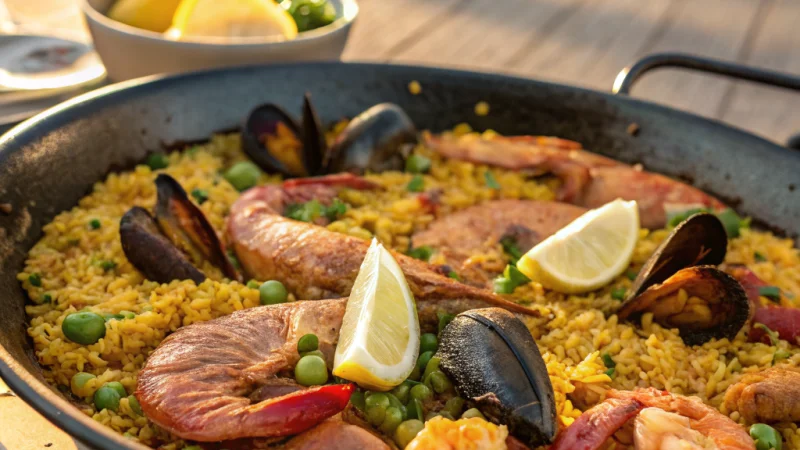
Seafood paella — no meat, made with shrimp, mussels, clams, and squid in a rich seafood stock. Popular along the entire Mediterranean coast of Spain. Purists note it is a separate dish from Valenciana.

🍗 Paella Mixta

Mixed paella combining chicken, pork, and seafood. The most commonly served version in tourist restaurants worldwide. Considered non-traditional by Valencians but widely enjoyed internationally.

🌱 Paella Vegetal

A fully vegetarian version using artichokes, peppers, aubergine, green beans, and mushrooms. Uses vegetable stock with plenty of saffron and paprika. Growing in popularity across Spain.

🖨 Arroz Negro

Black rice — made with squid ink, giving the rice a dramatic jet-black color and a deep briny, oceanic flavor. Served with aioli. A Valencian and Catalan specialty that deserves its own reputation.

🦐 Arroz a Banda

A two-part dish from Alicante — the seafood is cooked separately from the rice, which is served with aioli. Considered one of the most refined rice preparations in the entire Spanish repertoire.

🍳 Paella de Montaña

Mountain paella from inland Valencia — made with wild mushrooms, snails, and rabbit or pork ribs. The version closest to the original farmworker paella, with no seafood and intensely earthy flavors.

🍴 How to Serve Authentic Paella

Authentic paella is always served directly from the pan at the table — never transferred to a serving dish. The pan is placed at the center and everyone eats from it communally, each person working inward from their section of the rim toward the center. This is not merely tradition — it ensures that the precious socarrat on the base is distributed fairly, with each person responsible for scraping their own section. The only accompaniment required is a wedge of lemon, squeezed sparingly over the rice to add brightness without masking the saffron flavor. A light Spanish rosé or a young Valencian white wine makes an ideal match. Bread, salad, and other side dishes are welcome, but the paella itself is always the uncontested star of the table.

Nutritional Information (Per Serving)

Values are estimates per portion based on 6 servings using the ingredients listed. Values will vary depending on the type of stock used and the amount of olive oil applied during cooking.

NutrientPer Serving
Calories520 kcal
Protein38 g
Total Fat18 g
Saturated Fat4 g
Carbohydrates52 g
Dietary Fiber4 g
Sodium680 mg

Storage and Reheating

Paella is at its very best the moment it comes off the heat, when the socarrat is fresh, the rice is at the perfect texture, and the saffron aroma is at full intensity. Like most rice dishes, it does not store or reheat as well as meat or stew-based recipes. That said, leftover paella kept in an airtight container in the refrigerator can be consumed within 2 days.

To reheat, the best method is a wide pan over medium heat with a splash of water or warm stock. Spread the rice out in a thin layer and cover loosely for 3 to 4 minutes until heated through. The microwave works in a practical sense but produces steamed, slightly mushy rice rather than the dry, distinct texture of freshly made paella. Freezing cooked paella is not recommended — the rice grains become waterlogged and grainy upon thawing and cannot be restored to their original texture.

Frequently Asked Questions About Paella Recipe

What is the secret to a perfect paella recipe?

The secret lies in three things: a deeply cooked sofrito that forms the flavor foundation, the right rice-to-stock ratio (1 part Bomba rice to 2.5 to 3 parts hot stock), and the socarrat — the crispy caramelized layer of rice on the bottom of the pan. Never stir the rice once the stock is added, and never cover the pan. These two rules alone prevent the most common paella mistakes.

What rice is used in authentic paella?

Authentic paella uses Bomba rice, grown in the Albufera region of Valencia, or the closely related Calasparra variety from Murcia. Both absorb up to three times their volume in stock without becoming mushy, and both produce the separate, intensely flavored grains that authentic paella requires. Avoid Arborio, Carnaroli, or any long-grain rice — they behave very differently and produce the wrong texture.

What is socarrat and how do I achieve it?

Socarrat is the thin, crispy, caramelized layer of rice that forms on the base of the paella pan in the final two minutes of cooking, when the stock has been absorbed and the heat is raised slightly. It is the most prized part of the dish. To achieve it, increase the heat to medium-high in the last 2 minutes and listen for a dry crackling sound. Remove from heat the moment you detect a nutty, toasted aroma. Never stir or lift the rice during this stage.

Can I make paella without a paella pan?

Yes. Any wide, shallow, flat-bottomed pan works well — the key is surface area rather than the specific material. The rice should spread out no more than 2 to 3 cm deep. A 34 to 38 cm diameter stainless steel or carbon steel pan is ideal for 4 to 6 servings. Avoid deep pots or woks, which trap steam and prevent the rice from cooking properly or developing socarrat.

Why should you never stir paella once the rice is added?

Stirring after the stock is added releases starch from the rice, making it sticky and risotto-like rather than producing separate, stock-infused grains. It also destroys the socarrat, which requires the bottom layer of rice to remain undisturbed and in constant contact with the hot pan surface throughout the final cooking stage.

What is the difference between Valenciana paella and seafood paella?

Paella Valenciana is the original recipe from Valencia, made with rabbit, chicken, green beans, butter beans, saffron, and Bomba rice. It contains no seafood. Seafood paella (paella de marisco) is a separate coastal variant made with shrimp, mussels, clams, and squid. Mixed paella (paella mixta) combines meat and seafood and is the most common version found internationally, though it is not considered traditional by Valencians.